
Choosing the right Casual Hoodie supplier can shape your margins, delivery schedule, and customer trust. Global buyers need more than attractive product photos. They need factories that can manage fabric quality, sizing consistency, ethical production, and export communication.
Apparel supply-chain strategist John Thorbeck often emphasizes, “The best supplier is not always the lowest-cost supplier.” That principle matters when comparing these ten companies. A low quote may hide weak stitching, unstable cotton blends, slow sampling, or unexpected packaging charges. A reliable supplier should explain its minimum order quantity, production timeline, inspection process, and customization limits clearly.
Details matter.
During supplier evaluation, buyers should request fabric GSM, shrinkage data, color cards, and recent production samples. A hoodie that feels soft in a showroom may become rough after repeated washing. A printed logo can also crack when curing temperatures are poorly controlled. These small failures become expensive across a large order.
This guide compares ten Casual Hoodie suppliers for international buyers. It considers product range, manufacturing experience, customization ability, communication, quality controls, and shipping support. Certifications and factory claims still deserve verification. No ranking is perfect. A supplier suitable for a boutique may not fit a retail chain with strict replenishment needs.
Buyers should also examine response speed. It often reveals future cooperation. Ask difficult questions early. Review every answer carefully. The strongest partner is not necessarily the biggest factory. Sometimes, a smaller producer offers better attention, clearer sampling, and more flexible production planning. That possibility is easy to overlook.
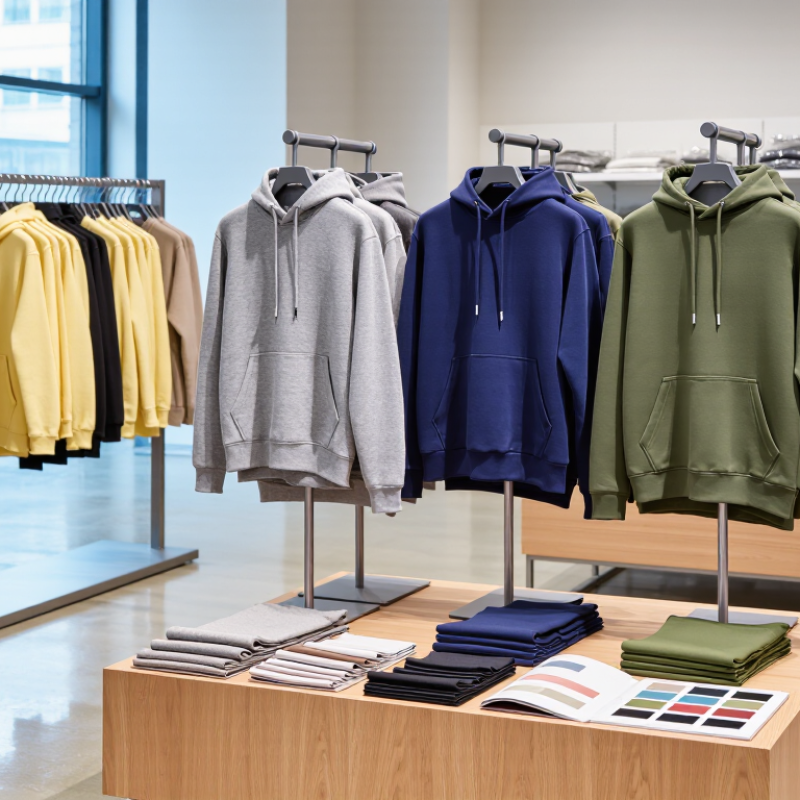
A reliable casual hoodie supplier proves consistency before promising scale. In supplier evaluations, I check fabric weight, stitch density, colorfastness, and shrinkage after washing. A clear technical sheet should list fiber content, GSM, measurements, tolerance, and finishing details. Samples matter more than polished photographs. One sample can still mislead, though. Request several pieces from different production batches when possible. This reveals uneven rib recovery, loose threads, or print placement errors.
Reliable suppliers also explain factory capacity and subcontracting practices. Ask who cuts, sews, dyes, and packs each hoodie. Written quality checkpoints make discussions less subjective. Look for pre-production approval, inline inspection, final inspection, and retained samples. Independent testing can verify pilling, seam strength, colorfastness, and restricted-substance compliance. Certificates help, but current documents and traceable test reports matter more. Honest suppliers disclose delays early and offer practical recovery plans. Perfect records are rare. Their response to mistakes is more revealing.
Tips: Start with a small trial order and define acceptance standards in writing. Compare the approved sample with packed goods, not memory. Confirm carton dimensions, labeling, shipping terms, and delivery schedules before payment. Keep communication records. A supplier who answers quickly but vaguely may create costly surprises. Review performance after every shipment.
| Rank | Anonymous Supplier Profile | Common Production Region | Typical MOQ | Sample Lead Time | Typical Bulk Lead Time | Typical Hoodie Materials | Customization Capability | Reliability Evidence to Request | Best Fit for Global Buyers |
|---|---|---|---|---|---|---|---|---|---|
| 1 | Full-Service Custom Manufacturer | East and South Asia | 300–1,000 pcs/style | 7–14 days | 30–60 days | Cotton fleece, French terry, cotton-polyester blends | Private labels, embroidery, screen printing, custom trims and packaging | Pre-production sample, material composition report, inspection records and production timeline | Startups and established labels requiring complete product development |
| 2 | Low-MOQ Sampling Specialist | South and Southeast Asia | 50–300 pcs/style | 5–12 days | 25–50 days | Single jersey, French terry, lightweight fleece | Basic cut-and-sew, logo application, size grading and small test runs | Size set, wash test, measurement chart and clear sample revision policy | Small brands testing designs before larger production |
| 3 | High-Volume Fleece Factory | East Asia | 1,000–3,000 pcs/style | 10–18 days | 35–65 days | Heavyweight fleece, brushed fleece, recycled polyester blends | Large-scale color programs, custom GSM, bulk printing and embroidery | Factory audit, capacity plan, shade approval process and final inspection report | Retailers, distributors and seasonal volume programs |
| 4 | Organic and Recycled-Fabric Specialist | South Asia | 500–1,500 pcs/style | 10–20 days | 40–70 days | Organic cotton, recycled cotton, recycled polyester and blended fleece | Sustainable labels, low-impact dyes, recycled trims and traceability support | Valid scope certificates, transaction records, fiber content tests and wastewater controls | Eco-conscious brands and buyers with sustainability requirements |
| 5 | Fast-Turn Private-Label Supplier | Southeast Asia | 200–800 pcs/style | 5–10 days | 25–45 days | Cotton-polyester fleece, French terry and midweight jersey | Existing blocks, custom labels, hangtags and standard packaging | Confirmed critical path, stock fabric availability, inline inspection and carton details | Online sellers needing quick replenishment and shorter development cycles |
| 6 | Premium Cut-and-Sew Manufacturer | Europe and Mediterranean region | 150–600 pcs/style | 10–21 days | 30–60 days | Combed cotton, heavyweight jersey, loopback and brushed fleece | Advanced pattern development, garment dyeing, specialty stitching and premium finishing | Detailed tech-pack review, workmanship standard, fabric testing and defect tolerance policy | Premium casualwear labels prioritizing construction and finish |
| 7 | Sportswear and Performance Hoodie Supplier | East and Southeast Asia | 500–2,000 pcs/style | 10–18 days | 35–65 days | Polyester-spandex, cotton-polyester, brushed performance fleece | Moisture management, reflective details, bonded seams and athletic fit blocks | Performance test results, colorfastness reports, size-set approval and seam-strength checks | Fitness, outdoor and athleisure product lines |
| 8 | Embroidery and Decoration Specialist | East Asia | 100–500 pcs/style | 7–14 days | 25–55 days | Cotton fleece, French terry and heavyweight jersey | 3D embroidery, appliqué, chenille, screen printing and woven patches | Decoration strike-off, artwork approval, needle-count details and wash durability test | Streetwear, merchandise and logo-focused collections |
| 9 | Small-Batch Artisan Production Unit | Eastern Europe and South Asia | 50–250 pcs/style | 10–21 days | 30–60 days | Natural cotton, loopback terry, fleece and linen-cotton blends | Limited-run colors, hand finishing, small graphic placements and custom labels | Production photos, operator quality checks, approved sample and transparent capacity information | Independent designers and limited-edition collections |
| 10 | OEM Replenishment and Basics Supplier | South and Southeast Asia | 500–2,500 pcs/style | 7–14 days | 30–55 days | Standard cotton fleece, cotton-polyester blends and French terry | Core colors, repeat styles, private labels and standardized packaging | Repeat-order history, fabric stock confirmation, quality-control checklist and delivery records | Wholesalers and retailers requiring consistent basic hoodies |
Check fabric weight, fiber content, measurements, stitch density, and shrinkage after washing. Samples matter more than photographs. Request several pieces when possible.
One sample may hide production problems. Compare pieces from different batches for loose threads, uneven ribs, and print errors. Small differences matter.
It should list fiber composition, GSM, measurements, tolerances, and finishing details. Confirm pocket construction, drawcords, colors, and labeling requirements. Write everything down.
Wash samples and compare measurements afterward. Check seam strength, pilling, colorfastness, zipper operation, and fabric recovery. Softness can mislead.
Ask who cuts, sews, dyes, prints, and packs the hoodies. Confirm production capacity, factory location, export experience, and subcontracting practices. Vague answers deserve caution.
Look for pre-production approval, inline inspection, final inspection, and retained samples. Review current test reports and traceable compliance documents. Certificates alone are not enough.
Compare prices, minimum order quantities, sampling fees, lead times, payment terms, packaging, and shipping conditions. Review every line carefully. Cheap offers may create costly revisions.
Start with a small trial order and define acceptable defects in writing. Keep an approved sample, communication records, and realistic schedule buffers. Delays happen. A supplier’s recovery plan matters.
This guide explains what global buyers should look for in a reliable Casual Hoodie supplier, including consistent product quality, transparent communication, ethical production, flexible customization, and dependable delivery performance. It presents a practical framework for evaluating potential suppliers by reviewing their product ranges, fabric options, manufacturing capabilities, quality-control procedures, certifications, and ability to support international orders.
The comparison also considers pricing, minimum order quantities, sampling services, production capacity, payment terms, packaging, and lead times. By examining these factors together, buyers can identify suppliers that balance cost, quality, scalability, and responsiveness rather than choosing solely on price. The final section offers guidance for matching a supplier’s strengths with the needs of different markets, sales channels, and customer preferences, helping businesses build a stable and efficient sourcing strategy for Casual Hoodie products.
